
All of the Accounts
By Jared Welch
Many people confuse savings accounts and retirement accounts as if they were the same thing, but they are actually very different. One is for saving money, and one is for saving for the far away future.
There are so many types of accounts. In this article we will break down all of them.
In the future we can always add more accounts as well if you have a specific question about one missing.
It might seem overwhelming when you think about it and learn about it but it’s really just a simple concept. Money is a tool and part of making it useful is we have different groups of money for different purposes. That is really all an account is. A group of money for a purpose.
The complicated part comes when you realize that there are many purposes for money. So therefore, there are many types of accounts. We will start with the familiar ones and then go into some of the more complicated / financial tooling type accounts for retirement.
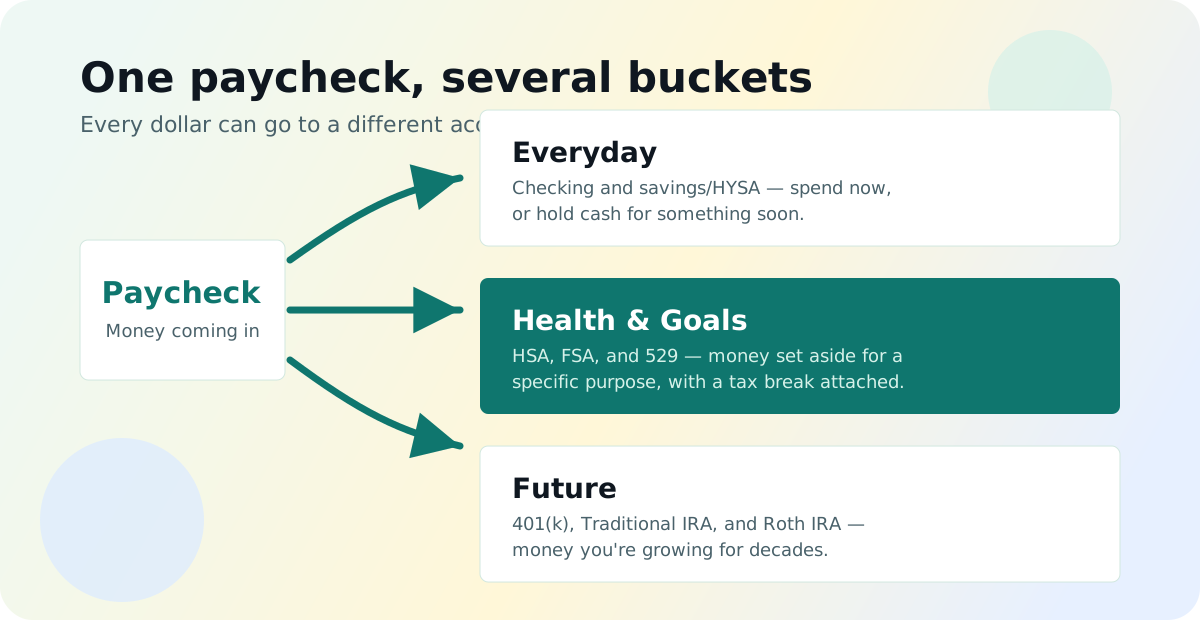
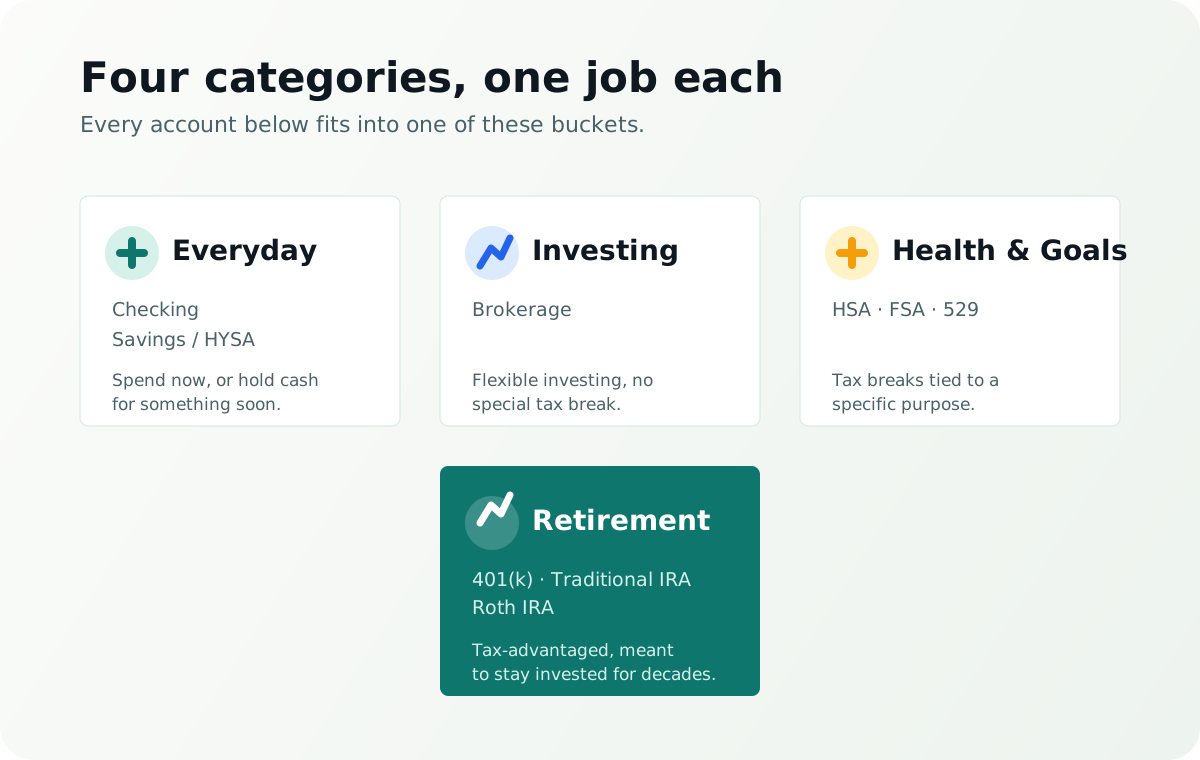
- Checking: Spend from
- Savings/HYSA: Save cash / earn interest
- HSA: Health Savings Account
- Brokerage: Personal Investment Account
retirement:
- 401(k): retirement through employer
- traditional IRA - retirement account you open yourself
- Roth IRA - a retirement account you add taxed now, tax free later money to
What is a Checking Account or Savings Account Anyway
The basic accounts most often used are checking accounts. This is an account made for the purpose of moving money in and out a lot and often. Think of it as the place for your daily purchases and monthly bills. The drawback is that these types of accounts generally have low or no interest earned on the money in them. This is because they are meant to be easy to move money in and out, not necessarily earn or save money.
That is where a savings account comes in. This type of account is designed for moving money in to be used later (weeks, months, years), often earning interest on that money more than a checking account. Some savings accounts have limits on the number of transactions you can make per month, and might have minimum amounts required to avoid fees. Often there is no debit or direct purchase method attached to a savings account making it hard to spend from. The goal of a savings account is to earn and grow your money, not necessarily move money out or frequently spend from that account.
Another term often used is High Yield Savings Account (HYSA). This is a particular type of savings account that tries to maximize interest earned. This is a better choice for larger amounts to make sure you earn the most value out of your money while you are saving.
Savings accounts have many practical uses: emergency fund, vacation, car, down payment, large gifts, etc.
You can also use multiple savings accounts for separate goals if you prefer that. Or you can add up your goals into one amount for your goal amount. Whatever is easier.
Quick mentions for research if you are curious: CDs: Certificate of Deposit - lock money in for a period, better interest, less flexible Money Market Account: Savings like, have debit cards or checking available
Investment Accounts
Brokerage / Personal Investment: This is becoming more and more accessible, but this is a basic account for investment purposes. You can think of this like an account with a bank, but normally with an investment firm. In the digital age, there are many options to setup an investment account online or through a mobile app. Brokerage accounts are for the purpose of investment and are more flexible, but lack the traditional tax benefits of the other types of retirement investment accounts. It’s always a good idea to become familiar with the types of accounts available including personal investment accounts.
Retirement Accounts
Retirement accounts trade a penalty for early withdrawal in exchange for a real tax break. The goal for them is for people to leave the money invested for decades so it can compound. There are 2 flavors: tax now and never again (Roth), or skip taxes now and pay them later (Traditional).
401k - retirement from an employer. Contributions come straight from your paycheck. Employer often will match some of your money, this is free money and you should always try to get maximum benefit from an employer match. This is a pre-tax retirement account, meaning that the money goes in without being taxable income. Very helpful and a big reason that retirement accounts are important to prioritize. Biggest downside to 401k is you won’t have much choice over what is invested, it is based on the plan offerings.
Keep in mind most of the time workplace retirement plans are separate limits from traditional IRAs! So you can do both!
Traditional IRA
A traditional IRA is an account anyone can open, not tied to an employer. You get similar tax advantages: taxes come out later, so benefits you if you expect to make less money in retirement than now. There is a limit for how much annually can be contributed.
Roth IRA
A roth IRA is slightly different than a traditional in terms of how taxes work. You will pay taxes on any money you contribute, however this means that any growth is tax-free as long as you follow the withdrawal schedule (early withdrawals can change things). There are income limits, but they’re not a hard cutoff. Your ability to contribute phases out as your income rises.
The decision rule
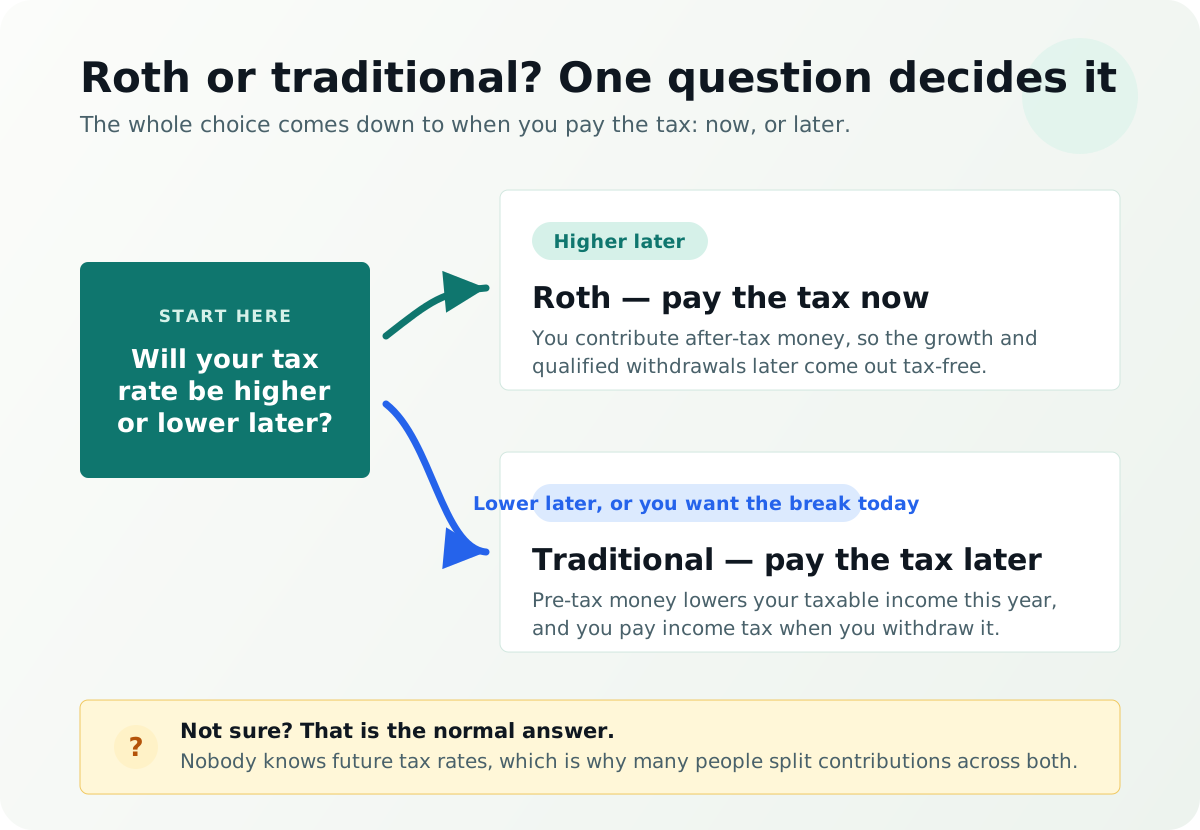
- Roth (pay tax now) if you think your tax rate will be higher later.
- Traditional / pre-tax (pay tax later) if you want the break today or expect a lower rate later.
- Honest caveat: nobody knows future tax rates for sure — which is why some people split across both.
Comparison Table
| 401(k) | Traditional IRA | Roth IRA | |
|---|---|---|---|
| Where you get it | Employer | Open yourself | Open yourself |
| Tax break | Now (pre-tax) | Now (maybe) | Later (tax-free withdrawals) |
| Employer match? | Often yes | No | No |
| 2026 limit* | $24,500 | $7,500 | $7,500 |
| Income limit to contribute? | No | No (deduction may phase out) | Yes |
* Limits are set by the IRS and change most years.
Health & Goal-Specific Accounts
Health Savings Account
A health savings account or HSA is a personal savings account for people with high deductible health plans. It offers “triple tax advantage”: contributions are tax-free, funds grow tax-free through interest or investments, and withdrawals are tax-free for qualified medical expenses.
FSA
A flexible spending account or FSA is similar to an HSA but employer-only and use-it-or-lose-it each year. No investing and no rollover.
529
A 529 is a tax-advantaged account for education costs. You can contribute and let it grow tax free. You can withdraw and use for qualified education expenses.
Strategy for You
- Get the full 401(k) match first always. Free money.
- Build an emergency fund in savings/HYSA.
- If eligible, prioritize the HSA.
- Fund a Traditional or Roth IRA.
- Once tax-advantaged space is maxed, use a brokerage account for extra investing.
This article is for general education only and isn’t personalized financial or tax advice. Account rules and limits change, so check current details before making decisions with your money.
Closing Thoughts
Finance is a tool, and different accounts can seem overwhelming with all the options. But knowing which account is suited to your needs can help improve your financial plan and give you advantages you might be leaving on the table.
Use the account best suited to your purpose and use this guide to help quickly remember which is which! Bookmark for future use when you come to a new goal that makes sense and need to learn about that account.
If you enjoyed this, share it with a friend and consider subscribing to get future updates!
If you want one place to track all these accounts and balances, PennyPenguin can help.
Learn with Penny Penguin
Get practical money lessons and new articles in your inbox.