
Basics of Personal Finance
By Jared Welch
Personal finance is a very common skill and many lack the basics. This article will introduce concepts and help you understand them. Personal finance is about money coming in, money going out, what you owe, what you own, and your personal financial goals.
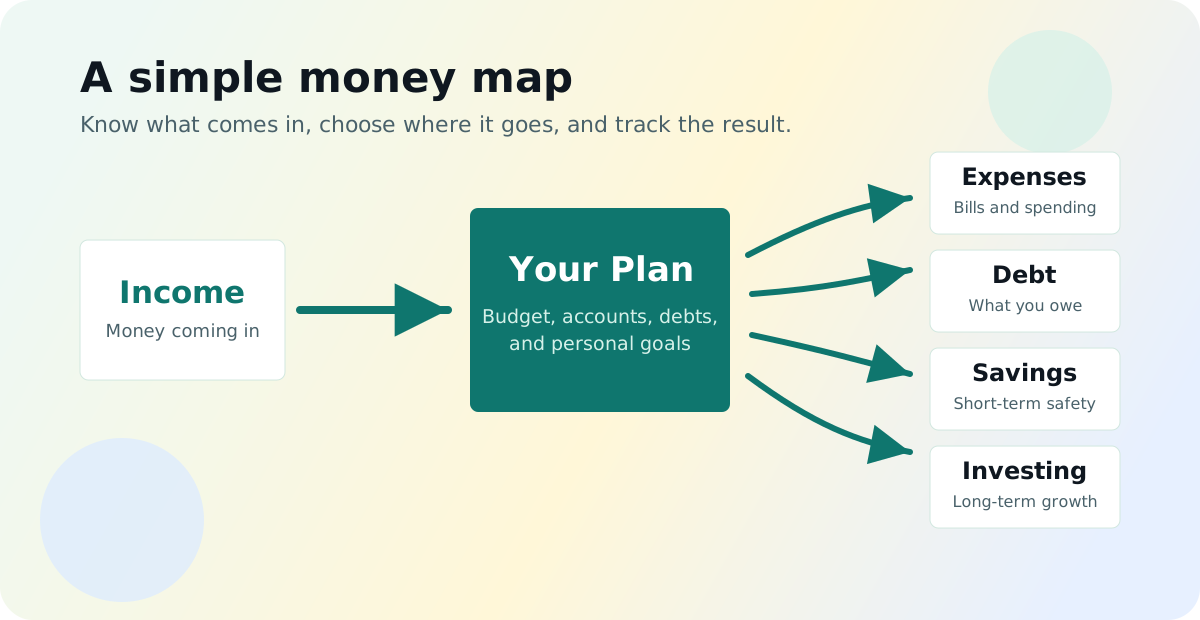
Short definitions
The basics we will use in this article will be income, expenses, assets, debts, and investments.
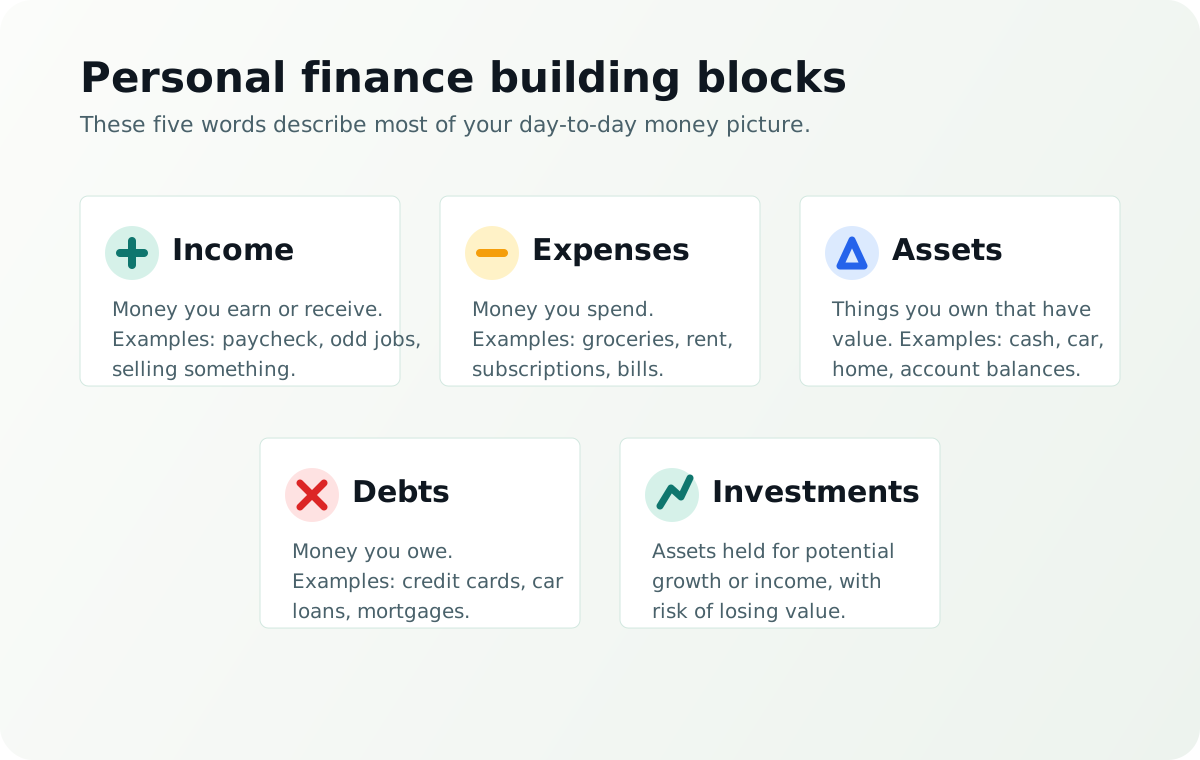
Income: What you earn / What is coming “In”. Expenses: When you spend money. Assets: Things you have that are worth money. Debts: Money you owe. Investments: Assets you buy or hold to grow in value or produce income, with some risk of losing their value.
Longer Definitions
Income is pretty straightforward. For most people this is likely from an hourly or salaried job. Maybe some extra income sources from odd jobs or a side hustle. Anytime you receive money or something equal to money. Normally from labor but it could also be from other sources like selling something, social security, etc. When you get more money, this is income.
Expenses are the part of money most like the best. Spending it! An expense is any time you pay a bill, buy groceries, pay the mortgage. The more expenses you have, the more income is needed (or debt) to cover those expenses. An expense is subtracting from the money you have.
Assets are a little more complicated, but these are things we own that have value. A car is an example of an asset. A home can be an example of an asset. Anything valuable enough to consider selling or holding value can be considered an asset.
Debts are anytime you owe money. Common examples are credit cards, car payments, or a mortgage for a house. Credit cards let you buy things now and pay later, but you are still spending money when you make a purchase. Until you pay the credit card bill, that balance is debt. Mortgages are the debt you owe to the bank or lender that helped you buy the house. An important part to consider with debt is that often it comes with interest charged, so the amount owed is increased over time based on interest.
Investments can be tricky, but they can be thought of simply as assets that you hope go up over time in value. Common examples are stocks or real estate. Some investments are held to generate income as well (Rent for rental property you own, dividends from stock) while you hold them. Investments create risk because your investment value can go down, even if you hope it goes up.
Strategy For You
Now that we have the basic terms, let’s think about a basic personal finance plan.
The basic strategy for personal finance is simple. But simple does not mean easy. It might be simple in theory but the hard part is consistently staying committed to a strategy. Working out and eating healthy is simple to say, but doing it day after day is not easy. Same with personal finance.
The first and most important rule is that PERSONAL comes first. Your plan should fit your needs and goals and lifestyle. It is personal to you. Only you can decide what is important and a plan won’t happen by itself.
Know your finances
If you don’t track what you spend and what you want to spend, then it will be hard to know when you are on track and off track. You don’t have anything to measure success if you aren’t measuring at all.
The first thing you need for personal finance is to track everything. Track what you make. Track what you spend. Track the budget category. Track your accounts and balances. Track your debts.
You can’t make a plan until you know your finances. So step 1 is gather intel about everything in your financial picture.
Make a plan
Once you know what your data shows, you can start to make a plan and track with real numbers. This is where you use your income knowledge from step one. Look at how much you have and make a budget. Pick categories for your budget. Pick amounts. You can either decide from the amount of income or you can decide from your current spending from looking at your tracking. Ideally your budget is smaller or equal to your income of course if you want to keep more of your money than you spend. You can also always budget in savings as something you spend on each month.
These two habits really can make a huge difference. Just knowing what you have and what you spend it on sets the foundation for the other stuff.
- Track your financial data
- Make a plan with knowledge of step one
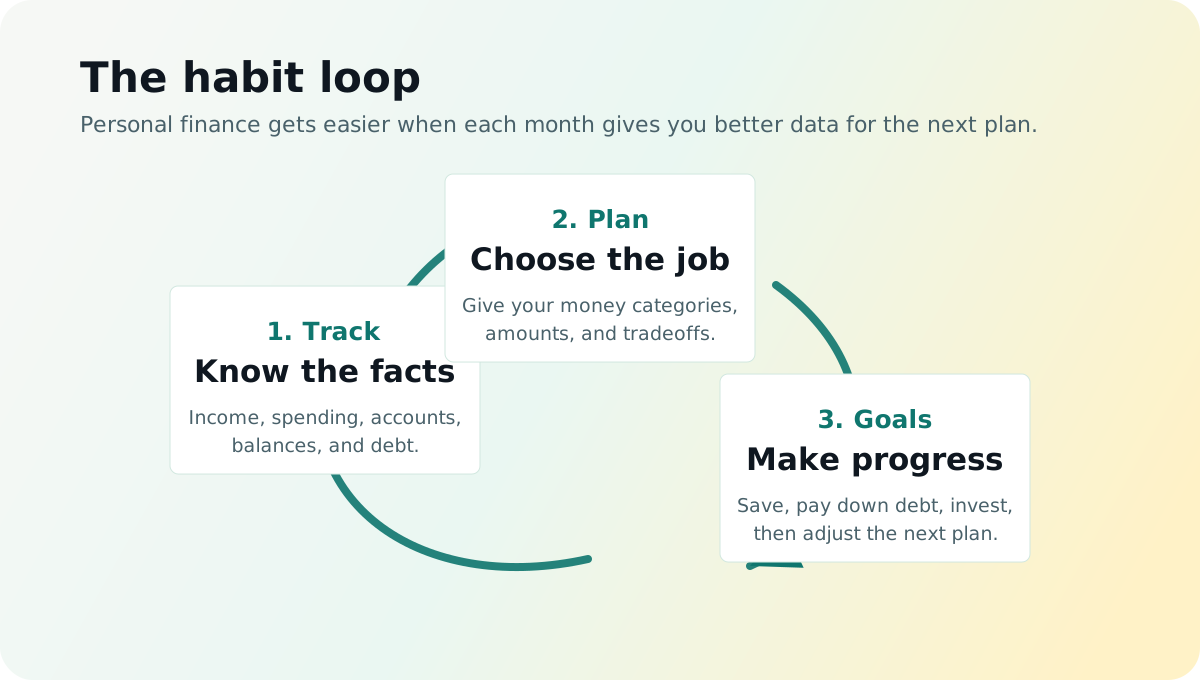
There isn’t a magic fix. Money in and money out. If you have more income than expenses you are going to be successful. If you have more expenses you are going to be struggling to keep up. Getting good financial health starts with tracking and having a plan that fits your personal income and lifestyle expenses.
Pursue Financial Goals
Once you have a budget and are tracking it, you can start to work on step 3. It’s really important to get steps 1 and 2 down first. The plan can change over time, we can change our budget numbers, but if we don’t have a budget and track it then we can’t really make any progress to this step.
Make goals for what you want with your money. This could be house, starting a family, car, vacation, paying off debt faster, anything that you want.
Once we have a budget and track it, we can start to adjust room for some of these other goals.
It is pretty easy to add a new section in your plan from step 2 now for your goal(s). You could track an account balance like for an emergency savings fund, or you could track an amount each month for that purpose. Save $20,000 sounds like a lot! But save $200 a month and add any extra each month can be more manageable. The important thing is to track your progress and plan your goals.
That’s it!
These are the basics, and there is a TON of complexity in the details, but in general
- Track your income and expenses
- Plan your budget
- Make goals + Include them in the plan
One more very important factor, arguably the most important: time.
The longer you have, the more your money can work for you and your habits will add up.
If you enjoyed this article or found it useful please consider sharing with a friend.
If you need a simple way to track your spending, accounts, budget, and goals in one place without making a bunch of spreadsheets by hand, PennyPenguin can help.
Learn with Penny Penguin
Get practical money lessons and new articles in your inbox.